
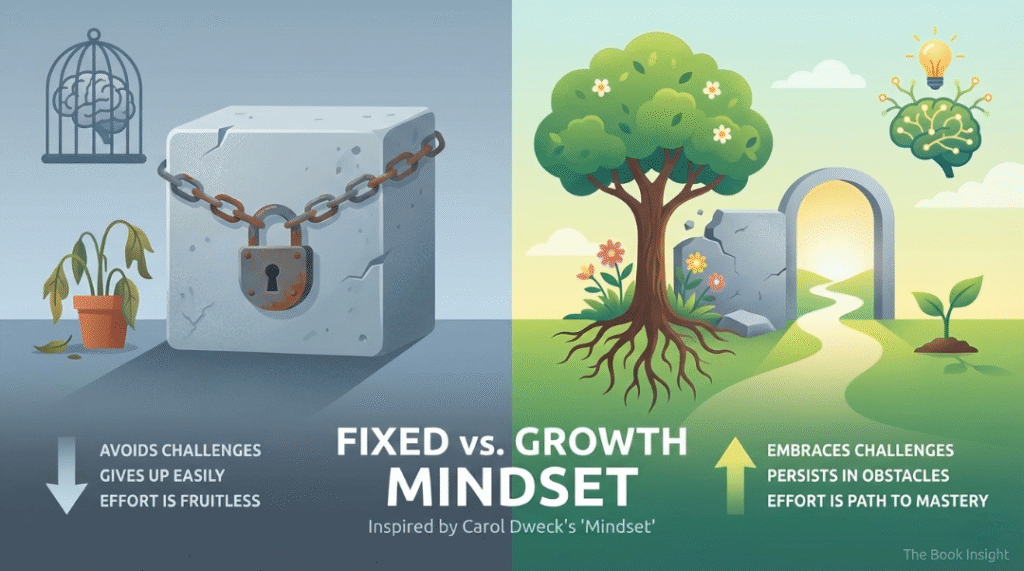
Fixed vs Growth Mindset: Why Mindset Matters More Than Talent?
Talent opens doors, but mindset decides how far you go
Many people believe talent is the biggest factor behind success, but in reality, mindset matters more than talent. A person may be highly talented, but without the right mindset to nurture, sharpen, and direct that talent, its value slowly fades. Talent without the right mindset does not grow—it stagnates. Over time, this lack of direction can even turn talent into a limitation rather than an advantage.
This journey begins early in life. As children, we are not born with ego, fear of failure, or a fixed mindset. These patterns are learned over time—through education, comparisons, and experiences with success and failure. But what if, from the very beginning, we trained ourselves and our children to adopt a growth mindset, to value learning, effort, and failure as part of progress?
In this article, inspired by Carol Dweck’s Growth Mindset Book, Mindset, you will understand the difference between fixed vs growth mindset, identify your own mindset patterns, and learn how to shift from a fixed mindset to a growth-oriented way of thinking.
What Is a Fixed Mindset?
When abilities are seen as permanent, growth quietly stops
One of the most common beliefs held by people with a fixed mindset is that their abilities, talent, personality, and intelligence are static—something they are born with and cannot change. They strongly believe that these traits remain the same throughout life. In reality, they often forget a simple truth: time never stops. If a person does not continuously upgrade themselves, learn new skills, and sharpen existing abilities, those same abilities slowly become a barrier instead of an advantage.
People with a fixed mindset usually carry a fear of failure, even though they rarely show it openly. This fear stays hidden in their mind. To protect themselves, they often speak in the opposite direction—claiming they do not need to participate, or acting as if they are already winners. They avoid challenges, give up easily, and justify it with excuses like “this is not for me.”
Instead of focusing on learning, they focus on looking smart. Many times, ego takes over, making them believe they do not need training, feedback, or improvement—when in fact, that mindset quietly limits their growth.
What Is a Growth Mindset?
When learning, effort, and improvement become a way of life?
The core difference in a growth mindset is the belief that skills can be learned and developed. People with a growth mindset believe that abilities are not fixed; they can be improved through regular practice, consistent effort, and the right learning perspective. Instead of judging themselves by current performance, they focus on the process of becoming better over time.
People with a growth mindset value effort, feedback, and learning. They put in effort, accept feedback openly, and work on improving their weaknesses. Their focus stays on learning because they understand that the more they learn, the more capable and confident they become in their field.
They also embrace challenges. Rather than fearing difficulties or giving up easily, challenges become part of their learning journey. They see challenges as opportunities to grow, try harder, spend more time, and eventually overcome what once felt difficult.
Fixed vs Growth Mindset — Key Differences (Comparison Section)
How beliefs and responses shape learning, failure, and success?
Understanding the difference between Fixed vs Growth Mindset becomes easier when we compare how people think, react, and define success. The contrast between growth mindset and fixed mindset is not about intelligence—it is about perspective.
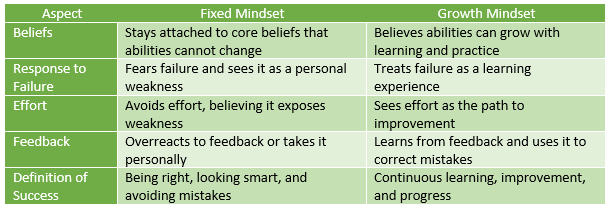
In a fixed mindset, people try to protect their self-image, while in a growth mindset, people focus on developing their abilities. This is why the gap between growth mindset and fixed mindset becomes visible not in success alone, but in how a person handles challenges, failure, and long-term growth.
Fixed vs Growth Mindset According to Carol Dweck
How mindset shapes long-term success beyond talent?
According to Carol Dweck, the central idea explained in her Mindset is simple yet powerful: the mindset we carry influences almost every area of our life until our last breath. In the comparison of Fixed vs Growth Mindset, she explains that mindset is not permanent. It can be shifted. When we move from a fixed mindset to a growth mindset, we open mental space where learning feels possible and challenges feel manageable instead of difficult.
Carol Dweck spent most of her professional life researching how beliefs about intelligence and ability affect behavior, learning, and achievement. Her research showed that people’s success is strongly influenced not by raw talent, but by how they think about improvement, effort, and failure. This idea forms the foundation of Growth Mindset vs Fixed Mindset Carol Dweck.
Mindset affects long-term success more than talent because it works like compounding. As Darren Hardy explains with habits, the impact of what we do today is often not visible immediately—but it becomes powerful over time. The same applies to mindset. Holding a fixed or growth mindset today may not show instant results, but over years it decides failure or success. If a person chooses a growth mindset every day and aims to improve just a little, after one year that person becomes 365 times better—not because of talent, but because of mindset.
Real-Life Examples of Fixed and Growth Mindset
How mindset shows up in daily learning, work, and personal growth?
Learning a new skill
Let’s suppose you decide to learn writing or playing the guitar from 1st January. With daily practice and consistency, you slowly start developing the skill—your writing becomes clearer, or your guitar playing gains rhythm. A fixed mindset may say “I’m not good at this” and stop early, while a growth mindset understands that improvement comes with time, effort, and practice. This simple difference clearly shows how fixed and growth mindset affect skill development.
Workplace feedback
Accepting feedback from clients, customers, or managers helps more than taking it in the wrong way. Many times, we spend long hours preparing a project to present in front of directors or MDs, and a small mistake can hurt our confidence. With a fixed mindset, that mistake feels like failure. With a growth mindset, feedback becomes a lesson—something you correct once and improve forever.
Exams, promotions, and failures
In exams or promotions, a fixed mindset treats failure as the end point, while a growth mindset sees it as temporary. People with a growth mindset analyze where they went wrong, improve their preparation, and try again with better clarity.
Personal growth situations
In daily life—health, communication, or confidence—a growth mindset helps you focus on progress rather than perfection. Small improvements, done consistently, lead to meaningful personal growth over time.
How to Shift from Fixed Mindset to Growth Mindset?
Small mental shifts that create long-term transformation
The journey from fixed and growth mindset begins with awareness of self-talk. We must consciously notice the words and thoughts running in our mind during learning, failure, or pressure. Common fixed-mindset self-talk sounds like:
- “I need to prove myself.”
- “If I fail, I’m not good enough.”
- “Others will judge me.”
These thoughts reflect a fixed mindset. Instead of fighting them, we simply replace them with growth-oriented language, such as:
- “I want to learn and improve.”
- “Failure is part of the process.”
- “Effort makes me stronger.”
This simple shift in language is one of the key ideas explained in Growth Mindset vs Fixed Mindset Carol Dweck.
Reframing failure is the next step. Failure is not unnatural—it is the foundation of creation and growth. Whether it is nature, human evolution, or personal development, things often break first before they are rebuilt stronger. Success rarely comes without failure. As the saying goes, failure comes first, success comes later. When we accept this truth, failure loses its power to stop us.
Embracing effort is also essential. Effort is not a sign of weakness; it is proof that growth is happening. Every hour spent practicing, improving, and learning compounds over time.
Finally, learning from criticism completes the shift. Every criticism is a brick in your learning stage. Build your empire brick by brick. Do not overreact, lose confidence, or feel uneasy. Identify the part that needs improvement, work on it, and move forward stronger.
Key Lessons from the Growth Mindset Book
What Carol Dweck teaches about learning, leadership, and long-term success?
In Mindset, Carol Dweck explains how deeply mindset shapes success, leadership, and personal growth. The ideas in the book clearly explain Growth Mindset vs Fixed Mindset Carol Dweck, not as theory, but as daily behavior patterns we live with.
Champion’s mindset
Champions are not defined only by talent. They are defined by how they respond to setbacks. A growth mindset helps people stay focused on learning, practice, and improvement—even after failure. Champions fall, reflect, and rise stronger.
Leadership mindset
Great leaders do not aim to look perfect; they aim to grow. Leaders with a growth mindset encourage learning, accept mistakes, and create environments where people feel safe to improve. This mindset builds trust, innovation, and long-term success.
The roots of mindset
Mindset begins early. Every word, action, and reaction from parents, teachers, or coaches sends a message that shapes how a child sees ability and failure. Often, adults want the best for their children—success, happiness, and growth—but unintentionally praise outcomes instead of effort. This creates pressure to always win and fear failure, pushing children toward a fixed mindset instead of growth.
Effort over outcome
The Growth Mindset Book repeatedly emphasizes praising effort, learning, and progress rather than results. When effort is valued, failure becomes feedback—not a verdict.
How readers can apply these lessons?
Start by praising effort in yourself and others. Focus on learning instead of proving. Encourage curiosity, accept mistakes, and treat feedback as guidance. These small shifts, practiced daily, slowly transform mindset and results.
Conclusion: Choosing the Mindset That Shapes Your Future
When we look at everything together, the real difference is not talent, intelligence, or luck—it is mindset. Throughout this article, we explored how beliefs shape learning, how failure is interpreted, how feedback is received, and how effort compounds over time. From daily self-talk to long-term habits, mindset quietly influences every decision we make.
The choice between fixed vs growth mindset is not a one-time decision; it is a daily practice. A fixed mindset keeps us safe but limited, while a growth mindset keeps us learning, improving, and moving forward. The good news is that mindset is not permanent. With awareness, effort, and reflection, it can be changed at any stage of life.
Growth does not mean perfection. It means showing up, learning from mistakes, and becoming slightly better than yesterday. If you want a deeper understanding, revisit each chapter of this article and reflect on how it connects with your own experiences. Small insights, when applied consistently, can create meaningful change over time.