
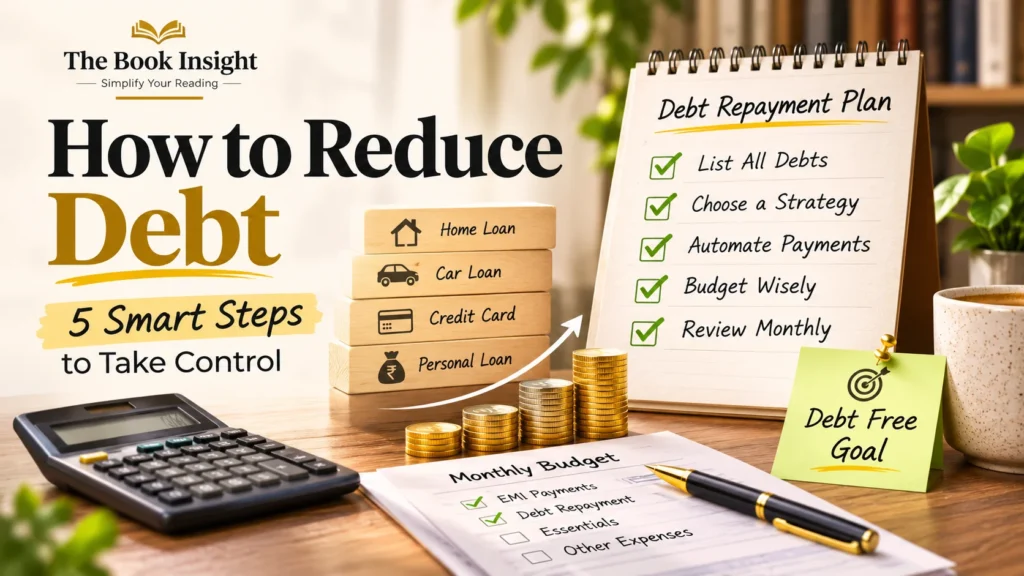
How to Reduce Debt: 5 Smart Steps to Take Control
Debt is something many of us experience at different stages of life. It could be a home loan, personal loan, credit card bill or EMI. The problem doesn't always come from borrowing money; it often comes from not having a proper plan to repay it.
Learning how to reduce debt is not about becoming debt-free overnight. It is about understanding what you owe, controlling unnecessary expenses and following a repayment strategy that works with your income.
Let's understand how to manage personal debt in a simple and practical way.
What Is Debt Management?
Debt management is the process of organizing your loans, managing repayments, prioritizing expensive debt and creating a plan to reduce your financial burden.
Let's take a simple example.
Suppose John borrows ₹50,000 to handle a personal emergency. He now has a responsibility to repay that amount, along with interest and any applicable charges.
This is where debt management comes into the picture. John needs to organize his monthly budget, understand the interest rate, decide how much he can repay and make payments on time.
The objective is to reduce unnecessary interest costs, avoid late-payment charges, manage financial stress and protect his credit history.
In India, your credit history is maintained by credit information companies, and your CIBIL score is one of the credit scores lenders may consider. Missing loan EMIs or credit card payments can negatively affect your credit profile.
Good Debt vs Bad Debt
Debt itself is not automatically good or bad. It depends on why you borrow, how much interest you pay and whether you can comfortably manage the repayments.
What Is Good Debt?
Good debt generally refers to borrowing that supports an important financial goal or helps you acquire an asset or opportunity that may provide long-term value.
Some examples include:
- Home loans: Borrowing to purchase a home. It may help you acquire a long-term asset, provided the EMI is affordable and the property purchase makes financial sense.
- Vehicle loans: Borrowing to purchase a vehicle that is necessary for your work or daily responsibilities. Remember that vehicles generally depreciate in value.
- Loans against eligible investments: Borrowing against certain investments may provide short-term liquidity without immediately selling those investments. However, understand the interest, repayment terms and risk of losing the pledged asset.
- Gold loans: These may provide access to funds during a genuine emergency, but interest, repayment conditions and the risk of losing pledged gold must be considered.
In simple words, debt that supports a meaningful purpose and remains affordable can be considered productive borrowing. However, even a loan for an appreciating asset can become a financial burden if you cannot manage its repayments.
What Is Bad Debt?
Bad debt generally refers to expensive borrowing that finances unnecessary spending, depreciating purchases or expenses you cannot comfortably afford.
Some examples include:
- Credit card balances: Carrying unpaid balances can become expensive because of high interest and additional charges.
- High-interest personal loans: Taking expensive loans for unnecessary purchases can increase your financial burden.
- Buy Now, Pay Later (BNPL): Small purchases can become difficult to manage when multiple payment obligations accumulate or convert into costly repayments.
In simple words, borrowing becomes unhealthy when the interest cost is high, the purchase doesn't provide sufficient value and repayments start affecting your essential expenses and savings.
The important lesson is not to avoid every loan. It is to understand the cost of borrowing before taking on debt.
How to Reduce Debt in 5 Smart Steps
You don't need a complicated financial strategy to start. Follow these five steps to bring more control and clarity to your repayments.
Step 1: List Every Debt You Have
First, understand how much you actually owe.
Many people have multiple financial obligations, such as personal loans, home loans, vehicle loans, credit card balances and Buy Now, Pay Later payments.
Prepare an Excel sheet or simply write everything in a diary.
Record these details for every debt:
- Outstanding loan or credit card balance.
- Interest rate or applicable APR.
- Monthly EMI or minimum payment.
- Payment due date.
- Remaining repayment period, if applicable.
Once you have this information, you can identify which debt is costing you the most.
Step 2: Choose Your Repayment Strategy
After listing all your debts, decide which one you want to target first. Two commonly used methods can help.
In this method, you prioritize the debt with the highest interest rate while continuing the required payments on your other debts.
For example, if your credit card charges more interest than your personal loan, you may prioritize paying down the credit card balance first.
This method can reduce the total interest you pay over time, assuming other terms remain comparable.
In this method, you prioritize the debt with the smallest outstanding balance.
Once you clear the smallest debt, move to the next one. These smaller victories can help you stay motivated and maintain consistency.
Both methods have their advantages. Choose the one that suits your financial situation and helps you remain consistent.
You can contact your bank or lender to discuss possible repayment options, such as restructuring or revised repayment terms. Any change depends on the lender's approval and applicable conditions.
If you consider a settlement, understand the consequences before agreeing. A settled loan is not necessarily treated the same as a loan repaid in full, and it can affect your credit profile.
Always get the revised terms in writing.
Step 3: Automate Your Required Payments
One common mistake is forgetting payment due dates.
Set up payment reminders or automatic payments for your required EMIs and credit card dues, wherever suitable.
You can schedule payments around your salary date, keeping enough money in your account to avoid failed transactions.
One important point: paying only the minimum amount due on a credit card does not clear the debt. It can leave you paying interest for a much longer period.
Try to pay the full statement balance whenever possible. If you are already carrying a balance, make a realistic plan to reduce it rather than relying on minimum payments.
Step 4: Budget for Repayment Before Spending
Before spending your monthly income on lifestyle or unnecessary purchases, decide how much you can allocate towards debt repayment.
Review your expenses and identify areas where you can reduce spending.
For example, if you are spending money on subscriptions you rarely use, frequent eating out or unnecessary shopping, consider redirecting some of that money towards your debt.
The objective is not to stop enjoying life. It is to make your repayment goal a priority.
Step 5: Review Your Progress Every Month
Once a month, review your repayment progress.
Ask yourself:
- How much debt did I repay this month?
- Which loan or balance should I target next?
- How much interest am I paying?
- Can I increase my repayment amount without affecting essential expenses?
Track your outstanding balances and update your repayment plan as your financial situation changes.
Small improvements every month can make a meaningful difference over time.
Create a Debt Repayment Plan
Having a strategy is important, but following it consistently is even more important.
Start by calculating your total outstanding debt and listing every repayment obligation. Then identify the debt that is costing you the most.
Negotiate with your lender if your repayment terms are becoming difficult to manage, review your monthly budget and reduce unnecessary expenses.
Personally, I prefer targeting the debts that create the biggest financial burden, especially those carrying high interest. The idea is to stop unnecessary interest from eating into your monthly income.
Don't forget to keep making the required payments on your other debts while focusing on your chosen target.
A simple repayment plan that you follow consistently is more useful than a complicated plan that you abandon after a few weeks.
Start Taking Control of Your Debt
Managing money starts with understanding your own financial situation.
You don't need to depend on financial gurus or follow every financial trend. Start by educating yourself, understanding your responsibilities and taking ownership of your financial decisions.
Learn about budgeting, emergency funds, debt management and long-term wealth creation. These areas work together to build a stronger financial foundation.
If you want to understand where you currently stand, try our Financial Health Score Calculator.
It will help you review your cash flow, emergency savings, debt, investments and other important areas of your financial health.
Start with awareness. Make a plan. Take one step at a time.
More Guides to Strengthen Your Finances
If this article sparked ideas about your financial health, these guides go deeper on the habits and frameworks behind them: