
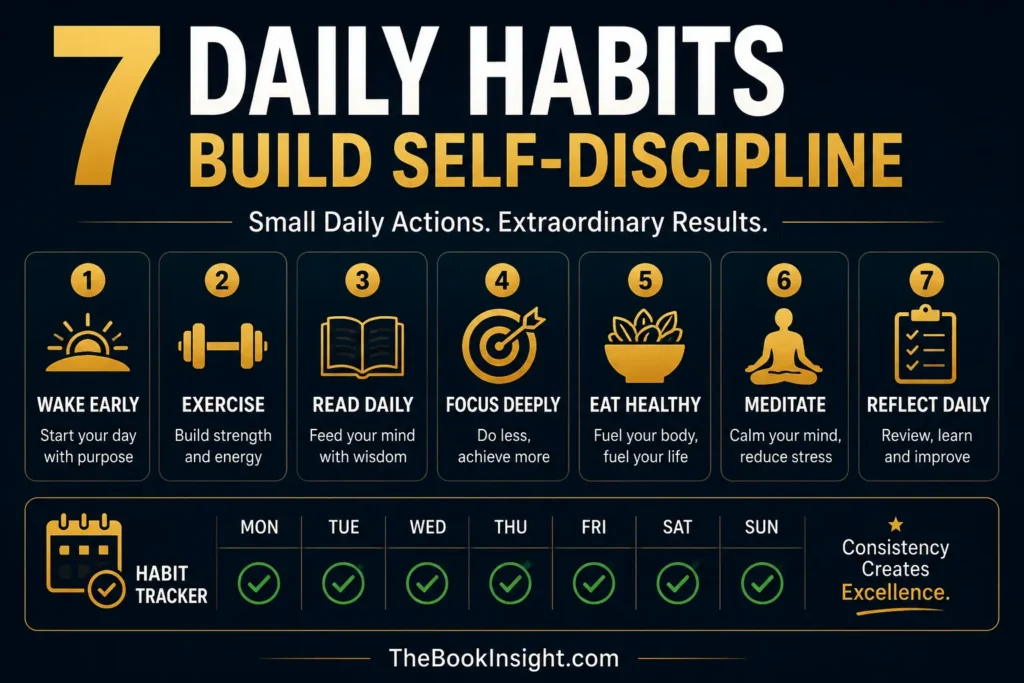
7 Daily Habits for Self-Discipline: Build an Unshakable Mindset
Motivation fades. Self-discipline stays. It's the quiet skill that carries you forward on the days motivation doesn't show up — and like any skill, it's built through habits, not willpower alone.
📖 Table of Contents ▼
Why Self-Discipline Is a "Superpower" in Life and Success?
Success is not built overnight — there's no magic shortcut to achieving greatness. The hard truth is that motivation fades, but self-discipline stays. Motivation might inspire action for a few days or weeks, but self-discipline is what keeps you moving even when life gets tough. Once you build this skill, it becomes your superpower — a steady flame that never burns out.
Contrary to popular belief, highly disciplined people aren't born that way. They've developed their focus and consistency through habits. Discipline is a skill you can train, just like a muscle — the more you practice, the stronger it becomes.
Habits are the building blocks of a disciplined life. As James Clear explains in Atomic Habits, success comes from small, consistent actions that compound over time. The habits of highly disciplined people aren't complicated — they're simple, repeatable routines that create long-term results.
This isn't just another motivational piece. It's a practical, step-by-step guide to help you build self-discipline through realistic daily actions, create a morning routine that actually sticks, stay consistent and crush procrastination, and adopt the productivity habits that help you reach your goals faster.
By the end of this guide, you'll have actionable strategies to start small, stay consistent, and take control of your time, energy, and life — no matter how busy or unmotivated you feel right now.
What Is Self-Discipline, and Why Does It Matter?
Self-discipline is the power to manage your thoughts, emotions, and actions even when distractions or temptations are strong. In simpler words, it's the ability to control yourself and push forward without needing external reminders or pressure. It's the inner strength that keeps you moving toward your goals — whether that's waking up early, hitting the gym, or saving money for the future.
How Self-Discipline Shapes Your Life
It Builds Focus on Long-Term Goals
Without discipline, most people chase instant gratification. Self-discipline lets you delay short-term pleasure for long-term success — the mindset that separates top performers from the average. A student preparing for competitive exams sacrifices weekend parties for months, even years. That discipline often pays off with a successful career.
It Encourages Consistency in Effort
Consistency is the secret sauce of mastery. When you practice something every day, your skills compound. Think about Tom Cruise — a global icon in action films. His mastery didn't come overnight; it came from 30+ years of consistent hard work in the same craft, improving with each movie.
It Fosters Self-Control and Resilience
When you build self-discipline, you become mentally tougher. You stop being easily swayed by distractions or failures, and over time resilience becomes a natural part of your personality.
It Leads to Better Decisions and Time Management
Disciplined individuals tend to plan their day, prioritize tasks, and avoid impulsive decisions. This habit improves productivity and reduces stress, making life more balanced and fulfilling.
The 7 Habits at a Glance
Here's a fast preview of the daily habits for self-discipline we're about to break down. Bookmark this — it doubles as your cheat sheet.
Habit #1: Start Your Day with a Morning Routine
Our ancestors and great scholars often said, "Own your morning, own your day." Early mornings are naturally quiet, with fewer distractions, making them perfect for building focus and clarity. The fresh air and peaceful environment help you connect with nature and set a positive tone for everything that follows.
Practices like meditation and exercise first thing in the morning train your mind and body to stay centered, productive, and calm. As Robin Sharma emphasizes in The 5 AM Club, rising early and following a structured morning routine gives you an edge over 95% of the world.
When you start your day intentionally, you take control of your time rather than letting chaos dictate it. A fixed morning routine creates structure, reduces decision fatigue, and boosts your energy — you feel more productive, confident, and in charge.
Morning Routines of Successful CEOs
Highly disciplined leaders follow strict morning rituals of their own:
Habit #2: Practice Daily Goal-Setting
One of the most powerful habits of highly disciplined people is setting clear goals every single day. A simple journaling or planner system can completely transform your productivity and mindset. Writing down your goals each morning helps you focus on what truly matters, instead of getting pulled into less important tasks.
Daily planning builds self-discipline because it forces you to prioritize your actions and take responsibility for how you spend your time. Whether you use a physical journal, a bullet journal, or a digital planner, this practice keeps your thoughts organized and moves you toward your long-term vision step by step.
Imagine starting your day by writing five important tasks in your notebook. At the end of the day, even if you've completed four, you'll feel a real sense of progress. Over time, that feeling fuels motivation and builds consistency — and it removes the mental clutter of constantly deciding "what to do next."
Pair habits with identity. Instead of "I want to plan my day," say "I am someone who plans my day." Identity-based language makes the habit stick far longer than a goal alone.
Why It Works (Backed by Science)
- A study from Dominican University of California found that people who write down their goals are 42% more likely to achieve them than those who don't.
- Journaling has been shown to lower stress levels, boost mental health, and enhance focus, according to research published in Advances in Psychiatric Treatment.
Habit #3: Embrace the Power of Micro-Commitments
One of the smartest ways to build self-discipline is committing to tiny, manageable actions every day — what James Clear calls Atomic Habits. Instead of waiting for motivation to strike or trying to change everything overnight, start small and let those tiny actions compound over time.
Humans naturally feel driven to fulfill commitments they've made — so why not make small commitments to yourself? Setting micro-commitments tricks your brain into building momentum, and over time these small steps create life-changing habits.
What feels small today becomes unstoppable progress tomorrow. This is the core of productivity habits — breaking down overwhelming goals into micro-actions you can't fail at.
Why It Works (Backed by Research)
- A study published in the European Journal of Social Psychology found it takes an average of 66 days to form a new habit, and starting small makes it far easier to stick with one.
- James Clear's Atomic Habits emphasizes the 1% rule: improving just 1% every day compounds into massive growth over time.
Habit #4: Prioritize Physical Fitness
Many people think "exercise" is all about building a muscular body, but that's a myth. The real goal of exercise is lifelong fitness — staying strong, energetic, and healthy for as long as possible. Regular movement isn't about aesthetics; it's about mental clarity, emotional stability, and physical resilience.
Daily exercise — even a 20-minute walk or light stretching — helps your body and mind work at their best. It's a cornerstone of self-discipline, because showing up for your body daily reinforces your ability to show up for everything else in life.
- Start with a 10-minute walk every morning to wake up your body and sharpen your focus.
- Practice desk stretches during work breaks to stay energized and avoid fatigue.
- Gradually add light workouts, yoga, or cycling to build stamina.
Why It Works (Science-Backed)
Studies show just 30 minutes of exercise a day reduces stress by up to 40% and lowers the risk of depression. According to the CDC, physical activity improves brain health, memory, and productivity while reducing chronic disease risk. A Harvard Medical School study also found that exercise stimulates endorphins — the "feel-good" hormones that boost mood and energy, helping you stay consistent with every other habit on this list.
Habit #5: Build a Distraction-Free Environment
In today's hyper-connected world, digital distractions are the biggest barrier to productivity. From constant notifications to endless scrolling, your brain gets bombarded with small dopamine hits every few seconds, making it harder to focus deeply on important work.
To build self-discipline, you have to design your environment for success first. This is where digital minimalism comes in — deliberately reducing unnecessary digital noise and curating a space that lets you actually think.
- Start your day with a dopamine detox: keep your phone out of reach for the first hour after waking.
- Create a work-only zone with no TV, gaming consoles, or distracting gadgets nearby.
- Turn off unnecessary notifications and uninstall apps that don't serve your goals.
According to a University of California study, it takes roughly 23 minutes to regain full focus after a single interruption. One "quick check" of your phone can quietly cost you nearly half an hour of deep work — far more than the notification itself ever felt like.
Research from Harvard Business Review shows digital distractions can reduce productivity by up to 40%, hurting both mental clarity and decision-making. Practicing digital minimalism sharpens your ability to focus, prioritize, and stay consistent with every habit on this list.
Habit #6: Develop a Strong Sleep Routine
Many people underestimate how much self-discipline and productivity rely on proper rest. Sleep isn't "downtime" — it's when your brain and muscles recover, recharge, and process information. A well-structured sleep schedule is the foundation for building sustainable discipline and reaching peak performance.
The 8-8-8 Rule for Balance
A healthy lifestyle follows the 8-8-8 principle — 8 hours of sleep, 8 hours of work, and 8 hours for leisure and growth. Prioritizing those eight hours of quality rest is crucial for staying focused, making better decisions, and building self-discipline in every area of life.
- Go to bed at the same time every night, even on weekends.
- Create a "wind-down" routine — dim lights, avoid screens, and stretch or read before bed.
- Keep your bedroom cool, dark, and tech-free to signal your body it's time to sleep.
Habit #7: Practice Self-Compassion
Many people see discipline as punishment, but true discipline is actually an act of self-care and self-respect. Building lasting habits isn't about being harsh on yourself — it's about being kind yet consistent.
Confusing discipline with self-punishment. Harsh self-criticism increases stress and burnout, making it harder to sustain habits — not easier. If you're beating yourself up over missed days, that reaction is the thing sabotaging your progress, not the missed day itself.
If you're trying to wake up early but oversleep one day, instead of beating yourself up, reflect on why it happened — maybe you slept late or felt drained. Use it as feedback to adjust your routine, not as a reason to quit.
Why Self-Compassion Builds Discipline
- Research by Dr. Kristin Neff shows people who practice self-compassion are more resilient and motivated, even after failure.
- Self-compassionate individuals are 25% more likely to stick to long-term goals because they recover faster from setbacks.
How to Stick to These Habits: A Mini-Guide
Building self-discipline gets easier when you track your progress and create a simple system to stay accountable. Here's a step-by-step way to make these habits part of your daily life.
A Simple Weekly Habit Tracker
| Habit | Mon | Tue | Wed | Thu | Fri | Sat | Sun |
|---|---|---|---|---|---|---|---|
| Wake up at 6 AM | ✅ | ✅ | ❌ | ✅ | ✅ | ✅ | ✅ |
Track visibly — keep your habit chart somewhere you see daily. Celebrate wins, even small ones. Be flexible — if you miss a day, don't quit, just restart the next one. And pair habits with identity: say "I am someone who meditates" instead of "I want to meditate."
The 30-Day Self-Discipline Challenge
Reading about habits is easy. Living them is what actually changes your life. Use this simple, actionable checklist to turn everything above into 30 days of momentum — one week at a time.
- Wake up at the same time every day
- Write 3 goals each morning
- No phone for the first 30 minutes
- Track your habit in a simple chart
- 10-minute walk or stretch daily
- One 25-minute distraction-free work block
- Read 1 page of a book daily
- Fixed bedtime, screens off 30 min before
- Stack a new micro-habit onto an old one
- Two distraction-free work blocks a day
- Weekly review — note what's working
- Practice one act of self-compassion after a slip
- Run your full routine without reminders
- Reflect: what habit felt easiest? Hardest?
- Choose 1 habit to keep building next month
- Share your progress with someone for accountability
You don't need to do all 7 habits perfectly from day one. The 30-day challenge works because it layers one small win on top of another — by week four, discipline stops feeling like effort and starts feeling like identity.
Discipline Is Built Daily, Not Overnight
It's not about perfection — it's about showing up every single day, even when it's hard. Start small, stay consistent, and over time these daily habits for self-discipline will transform your mindset, boost your productivity, and help you reach your goals.
Instead of trying to change everything at once, pick one habit today — just one — and commit to practicing it for the next week. This is how real growth begins: step by step, day by day.
Productivity habits aren't a quick fix. They're a lifelong investment in becoming your best self.
More Guides to Strengthen Your Discipline
If any of these seven habits struck a chord, these guides go deeper on the specific skill behind them:
Frequently Asked Questions About Self-Discipline
Real questions people search about building self-discipline — answered directly.
The seven habits covered in this guide are a strong starting point: a consistent morning routine, daily goal-setting, micro-commitments, physical fitness, a distraction-free environment, a strong sleep routine, and self-compassion. Together they build the focus, energy, and consistency that self-discipline depends on — and you don't need all seven at once to see results.
Research published in the European Journal of Social Psychology found it takes an average of 66 days to form a new habit — though this varies by person and habit complexity. The key is consistency over intensity: one small habit practiced daily for two months builds more lasting discipline than an ambitious routine you abandon after a week.
Motivation is a feeling — self-discipline is a system. Motivation depends on mood, energy, and circumstances, so it naturally rises and falls. Self-discipline is built through repeated habits and routines, which means it keeps working even on days when motivation is completely absent. That's why habit-building matters more than waiting to "feel motivated."
Start with one habit, not seven. Most "failed" routines fail because they try to change everything overnight. Pick the single easiest habit from this guide, track it visibly, and stack the next habit only once the first one feels automatic. Missing a day occasionally is normal — what matters is restarting the next day instead of quitting.
Yes — self-discipline is a trainable skill, not a fixed personality trait. Highly disciplined people aren't born that way; they've simply practiced focus and consistency through repeated habits until those habits became automatic. Like any skill, it strengthens with deliberate, regular practice.
Micro-commitments and a distraction-free environment tend to work fastest against procrastination. Committing to a tiny, almost-too-easy version of a task (like "just one page") lowers the resistance to starting, while removing digital distractions protects the momentum once you've begun. Pairing both with a simple daily tracker keeps procrastination from creeping back in.